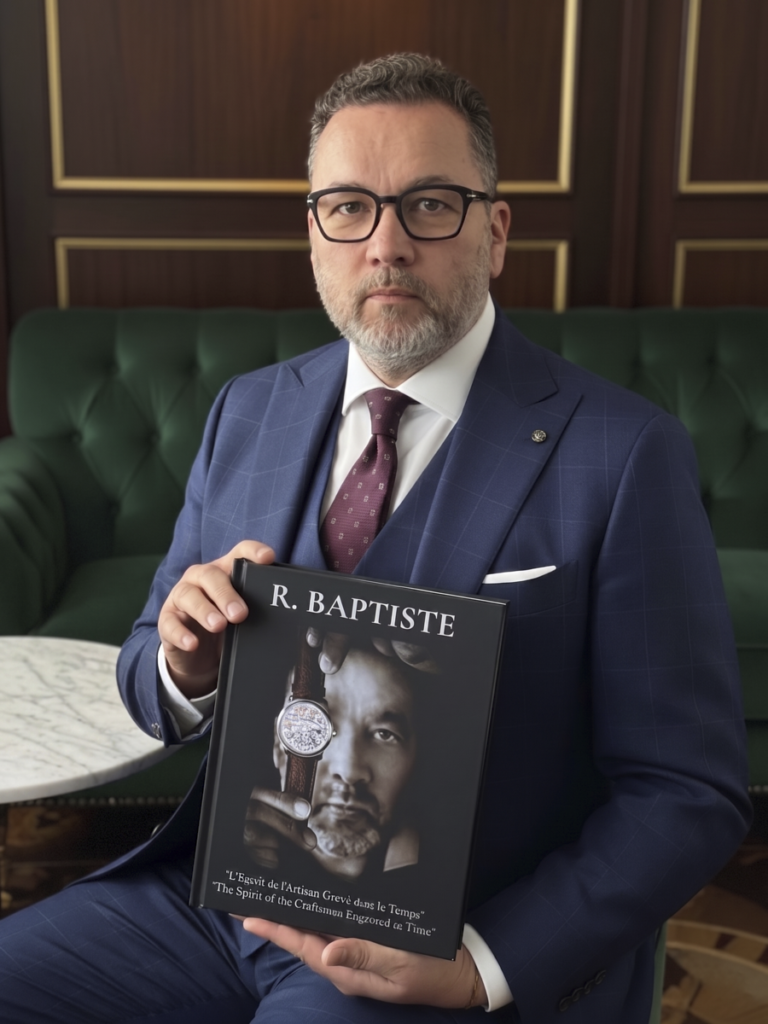
History and Know-How RBaptiste
Three ways to meet the workshop
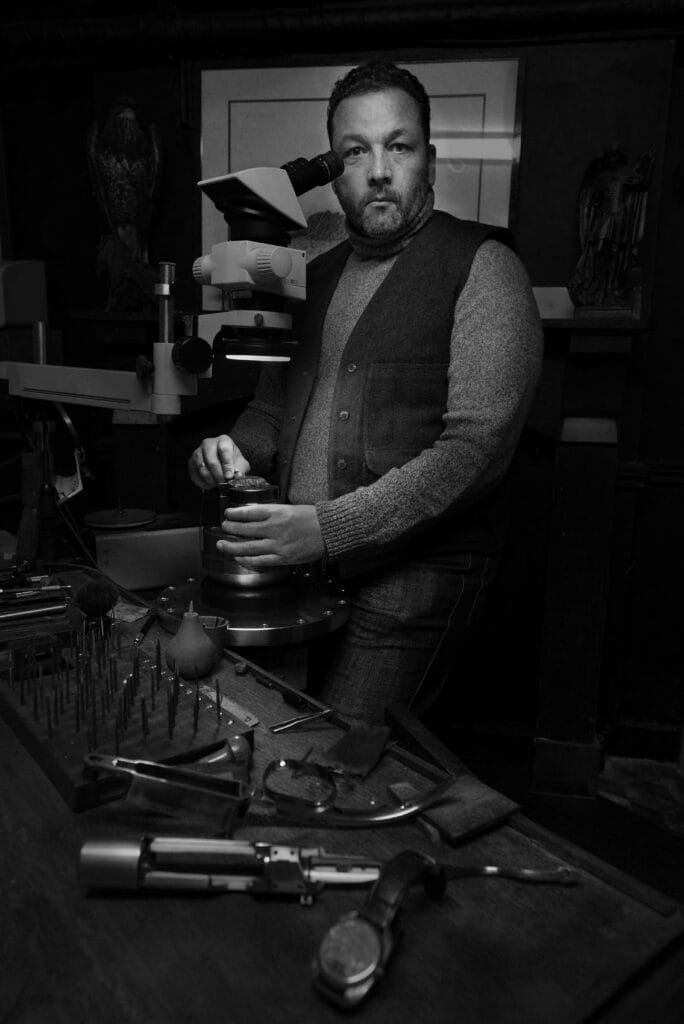
Engraving watchmaker. A life spent learning the material, and a workshop in Verviers where each watch bears the trace of one hand.
Watchmaker, first
Roland Baptiste makes watches. Not watches in the industrial sense of the term, but hand-assembled timepieces around Swiss movements that he selects, transforms and decorates himself. Each piece goes through its workbench from the first sketch to the last chisel stroke.
What defines his work is not the calibre – it’s the gesture. A fully hand-engraved build requires several days of chisel. A decorated dial, sometimes more. At this level of finish, two pieces cannot be strictly identical: the hand cannot repeat itself.
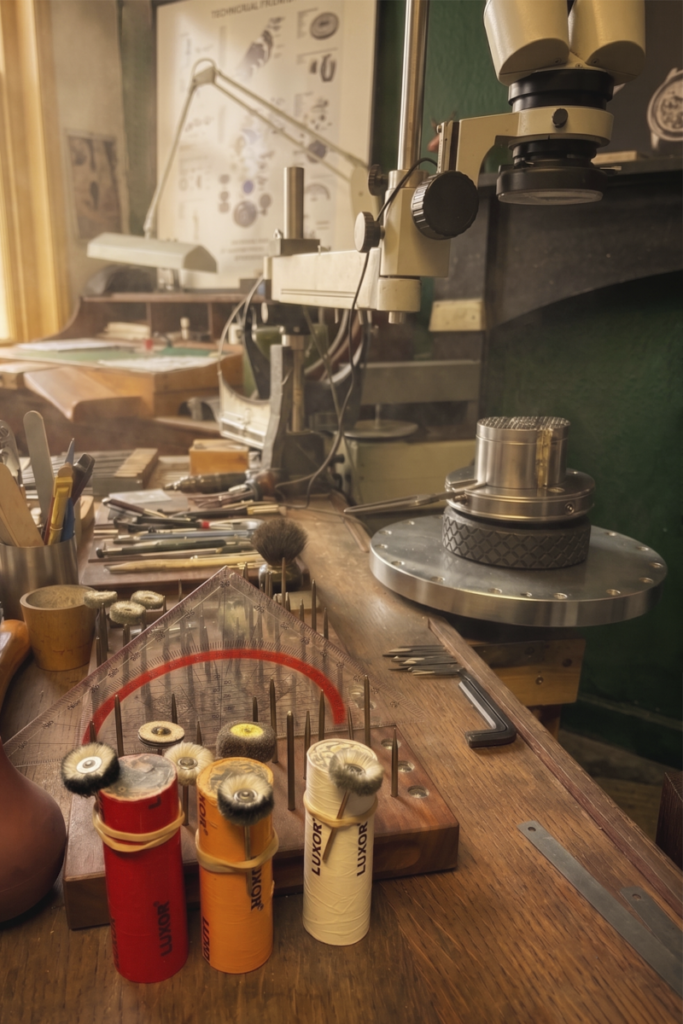
L’atelier est installé à Verviers, en Belgique. Roland y conçoit, grave, décore et assemble seul ses créations. Les boîtiers et certaines opérations techniques sont confiés à un cercle restreint d’ateliers belges spécialisés ; le mouvement est de fabrication suisse.
A Liège root
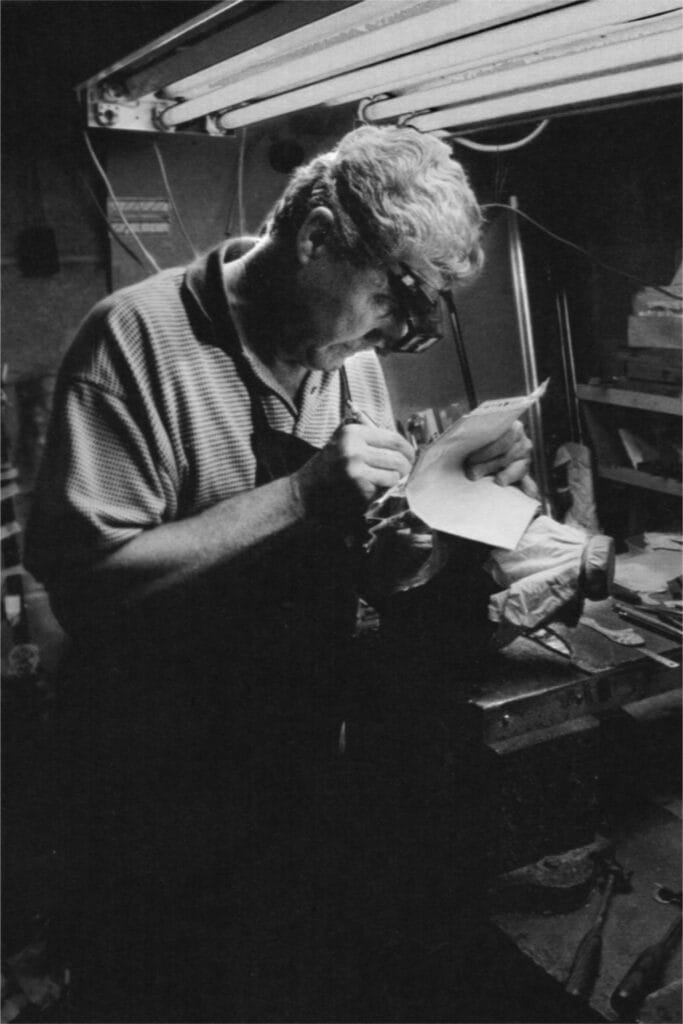
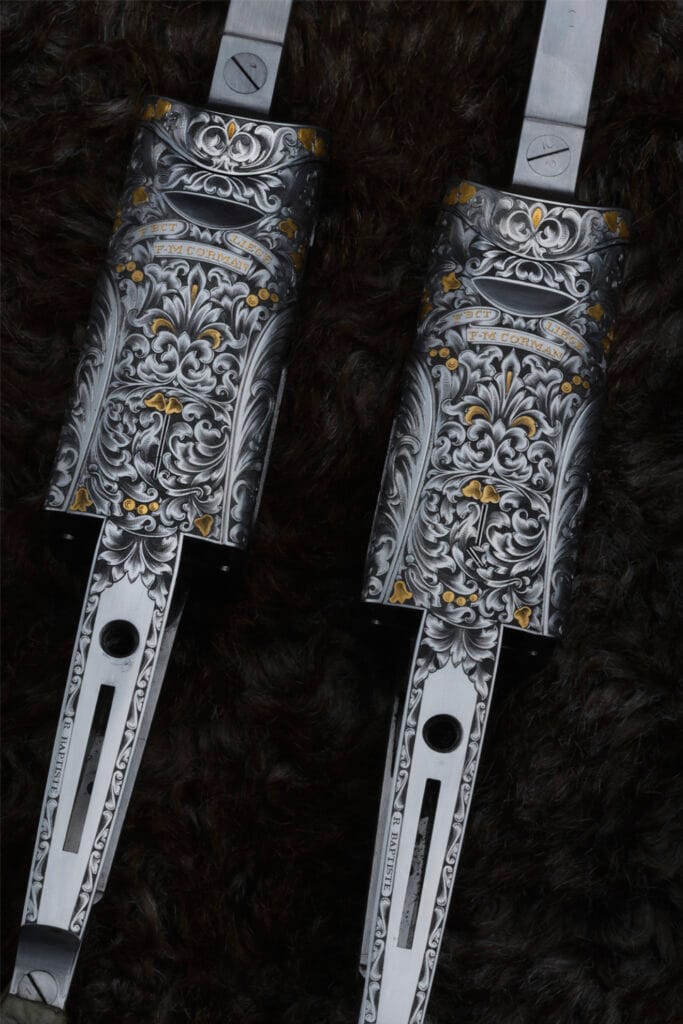
Originally from the Liège region, son of an engraver, Roland entered the profession naturally. In Liège, engraving is a legacy: the city has long been a major centre of European fine armoury, and the engraving of weapons – shotgun swings, turntables, prestigious mechanics – has forged a rare level of demand for generations.
It was in this universe that he learned. For more than thirty years, he has engraved for some of the most prestigious armoury houses, mainly in Belgium and England, where the great historical factories are concentrated. His name, at that time, remained invisible. The engraving bore that of other brands.
He refused, very early on, to comply with the logic of mass production. This decision cost money. It has preserved the essentials: a freedom of gesture, a finishing requirement, a recognisable aesthetic language.
“I didn’t want to engrave objects anymore: I wanted to create stories.”
Roland Baptiste
From gunmaking to watchmaking
Watchmaking has always accompanied him. Already as a teenager, he followed the news, observed the movements, examined the pieces. The profession of watchmaker and that of engraver share the same fundamental requirements: patience, meticulousness, respect for the millimetre.
The passage was gradually imposed. Making a timepiece signed by his own hand, where the engraving work would no longer be accessory but central, has become an increasingly precise project from year to year. Roland then built his own case architectures, defined his engraving templates, and made each watch an object entirely thought out from the workshop.
Today, the signature R.Baptiste appears in full on the piece. She no longer has to hide behind another name.
Recognition
Roland Baptiste is among the artisans referenced by the Michelangelo Foundation within the Homo Faber platform, which identifies the European masters of art of excellence. His work is followed by the press specialising in independent watchmaking and crafts.
His workshop
RBaptiste is not a manufacture, nor a microbrand. It is an author’s workshop, based on a few simple certainties: hand work remains readable to the naked eye, rarity is not manufactured, and the history of an object counts as much as its function.
Some of the pieces are born from Roland’s own vocabulary – acanth leaves, Louis XVI motifs, baroque, animal, heraldic ornaments. Others take root in a story entrusted by a future owner: a family coat of arms, a personal theme, a symbol, a date. It is in these dialogues that the house takes, perhaps, its full measure.
The rhythm is that of the workshop. A few pieces per year. The time required by the gesture.
To discover the creations, or to engage in a personal project.
The history of Roland Baptiste and the spirit of his workshop were the subject of a reference work: R.Baptiste – The spirit of the craftsman engraved in time, in which his career, his creations and his vision of the profession are gathered.